

Networking has transformed how artists enter the music industry, using the power of connections for exposure. Yuna’s career kickstarted with her viral breakthrough on MySpace, while Hujan gained prominence in the independent music scene by actively participating in gigs and festivals. Social mobility becomes a factor in this equation, while incentivized platforms struggle to fairly compensate artists. Platforms such as Apple Music pays artists around one cent per stream and $0.003 for Spotify — akin to comparing a dollar bill with a fraction of a cent. As artists climb up the ladder, their music may adopt a more generic appeal, while communal sharing platforms like Bandcamp and Traxsource often receive less attention in the bigger picture.
Social distinctions are apparent in the music realm, more so than other art forms. Some view underground gigs as catering to the “financially struggling” demographic — shifting attention from the musician’s sonic output to their audience and commercial potential. A viral tweet from a now suspended Twitter account @MALAYSIAVIRALL once lambasted underground gig goers, calling it, “Cara anak-anak B40 berhibur. Minta kkm tidur kan semuanya.” Underground festivals offer ticket prices at a low cost, thus making it affordable for gig goers who come from lower class backgrounds. For Atas Angin Festival, tickets begin at RM100/day depending on the lineup.
Despite the accessible entry point, it still takes a considerable investment to venture into music, and the stereotype that “poor musicians attract poor audiences” faced scrutiny by social media users. Pursuing music, even as a hobby, is expensive. Unlike visual art, where tools can be improvised, the type of instruments you own impacts the quality of your music, especially during live performances. A premium Fender Stratocaster can last you for decades, compared to an entry-level guitar subjected to wear and tear.
Dividing musicians into niches is a response to the industry’s consumerist model. But how do these variations influence the dynamics within the music scene?
This is where industry trends come in, and how musicians’ access to resources varies at different levels.
Seasoned Veterans
Only two local acts — Siti Nurhaliza and Fish Leong — have performed at Bukit Jalil Stadium. Their large fanbase sets them apart from the current viral-driven artists dominating the pop charts. Siti Nurhaliza is the “Voice of Asia”, while Fish Leong gained recognition with her emotive ballads.
Bukit Jalil Stadium’s performance history reveals a hiatus between 2013 and 2019. After Linkin Park’s “Living Things World Tour” in 2013, there was a six year gap, with no major artists performing at the arena, until Ed Sheeran’s “÷” tour in 2019. Notably, this coincided with Malaysia’s political shift, marked by events such as the Kajang Move, the MH370 and MH17 tragedies, the 1MDB Scandal, Bersih 5.0, you name it. Data from Macrotrends LLC shows that Malaysia’s foreign imports dropped from 64.52% of GDP in 2014 to 57.5% in 2019. The stadium might have been affected by the political and economic uncertainties, casting doubts about its suitability for major music events. Amid an 18.07% rise in foreign imports between 2021 and 2022, the stadium has seen an influx of global sensations, featuring the likes of Billie Eilish, Blackpink and Coldplay.
The shift sparked controversy, as Malaysia’s Islamic Party (PAS), criticised concerts like Blackpink’s for promoting “hedonism” and “LGBT sentiments”. Their critique took a turn, when the party held Blackpink accountable for performing during floods, implying a lack of sensitivity towards the tragedies. As reported by The Star, the “Born Pink World Tour” on March 4, 2023, saw an estimated turnout of 60,000 people. Despite economic benefits, scepticism remains, echoing the country’s conservative views. This raises whether a level playing field can be created for emerging artists to thrive, especially when their established counterparts might not encounter similar prospects.
Mainstream Artists
Artists often follow a playbook of creating catchy, radio-friendly tracks with broad appeal. Ever encountered playlists like “Hot Hits Malaysia”, “Made in Malaysia” and “Gempak Hitz” on Spotify? They are prominent editorial selections — a blend of mainstream and locally produced artists that achieved viral success. ALYPH, a Singaporean-Malay singer and producer making waves from Malaysia, is no stranger to this formula: his track “SWIPE” topped the charts with over 1.5 million TikTok posts and 10 million Spotify streams. His repetitive hook “Kalau aku like, aku like, kalau tak aku swipe” drew in trends like the “#AkuSwipeChallenge” with participatory dance moves from local celebrities and politicians.

The marketing break-through owes much to his safety net, Def Jam Recordings South-East Asia. The label functions within an A&R (Artist & Repertoire) department for talent scouts, alongside legal, PR (Public Relations), creative and video teams. It houses Malaysian producers SonaOne and Joe Flizzow, renowned through releases and collaborations in the hip-hop scene. Their music video for “Satu Malam di Temasek” produced within the label’s production teams, garnered over 10 million YouTube views. The video gains praise for its cinematic landscapes, exploring narratives of death and success. In an exclusive interview with HYPE News, Joe Flizzow emphasised Def Jam’s potential, standing as a launchpad for Malaysian Artists onto the global stage. Together with SonaOne and ALYPH, he headlined Rolling Loud Festival in Pattaya, Thailand and collaborated with American rapper Snoop Dogg on the track “Pioneers”.
As a subsidiary of Universal Music Group, Def Jam generates an annual revenue of $25.0 million. To maintain this profit, record labels prioritise commercial viability through market research and branding. Artists start by establishing their reputation, whether through grassroots efforts such as live performances and social media or cultivate industry connections with producers and executives. Upon signing to a major record label, this becomes a leverage, granting them a considerable amount of support before achieving commercial success.
The Emerging or Independent

Independent artists, whether self-represented or backed by boutique labels, preserve their creative autonomy. TongTongAsia, led by Jin, also known as “Old Head Jin” or “Jin Hackman”, operates within a small team, managing marketing and A&R responsibilities.
“Success is subjective, but achieving it on your own terms is something we’ve always been pushing for. We’re pretty much aligned with our artists on that,” he emphasised.
Alternative rock band Midnight Fusic, part of the label’s diverse roster, solidified their position with Sony Music and a strong presence online. This resulted in brand deals, festival headlining and collaboration with industry producer SonaOne for their single “Summer Love”. Other label artists may still be building their reputation or resonating with unconventional genres like fractional math rock band, The Filters.
Jin highlighted that due to limited in-house resources, artists seek external opportunities, often focusing on digital presence and PR campaigns. “For the emerging artist on a limited budget, understanding how the TikTok algorithm works and being consistent with your (short-form) content has proven to produce better returns.”
“But of course, there’s no use having a viral moment if you don’t have a plan to capitalise on the momentum from it. Longevity is key.”
Artists vary in their approach, from performing in licensed venues to sidelining international festivals for exposure. Some acts under TongTongAsia’s wing in Good Vibes Festival 2023 were Airliftz and Lunadira. But following Matty Healy’s on-stage kiss with bassist Ross MacDonald, Minister Fahmi Fadzil ordered cancellation of the rest of the festival, incurring losses for vendors, crew and artists. Given the unpredictable nature of the festival ecosystem, we asked about potential instances where organisations might take advantage of the label’s independent position.
This isn’t an issue for TongTongAsia, as they are on top of their business for gigs. For a company without extensive legal support, clear contract clauses are vital to ensure fair and timely payment for artists. Jin started the company to create a balanced field between independent artists and those supported by major labels.
“Being part of our ecosystem allows you to tap into industry standard management services, live performance opportunities as well as our nuanced expertise in music marketing,” Jin added.
Independent artists lack the same influence over their mainstream counterparts, struggling to tour extensively or break into media without the financial support of major record labels. Nonetheless, access to a marketing team and connections with industry professionals improves their outreach in the game.
Underground Artists
Punk and hardcore bands embrace the underground scene, functioning autonomously in well-known gig venues such as Rumah Api (KL), Ruas (Penang), The Rockin Jamz Hall (Johor Bahru) and Bangunan (Melaka). Some can only afford to remain in this scene, as their mere existence is deemed controversial. Exhibit A: Shagrilla Raids.
An entertainment license for small venues like Angkasa Space costs RM77,000, including RM50,000 for the deposit and an additional RM27,000 for the licence. Small venues find this financially unfeasible, since they cater to alternative artists who value live performances over their online visibility. Hence, performers turn to unlicensed venues in gated communities, safeguarding themselves against potential vigilantes.
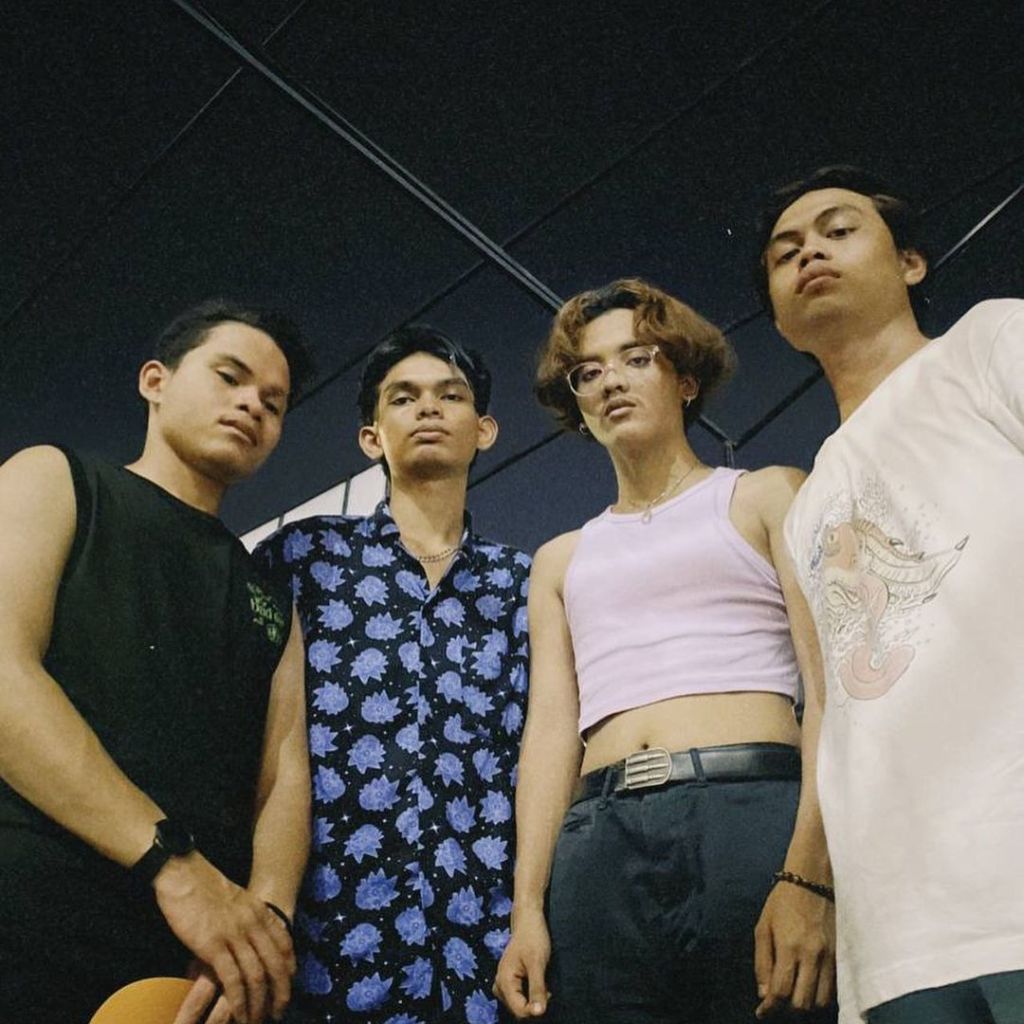
“This is why ‘Ask a Punk’ is an effective technique, keeping codes for the circles,” said Juno, the frontman of alternative pop band, junosuara. This practice involves punk performers acting as points of contact, discreetly providing details about the gig venue.
“Always be prepared for informants; they’re quite obvious and detectable,” he advised.
While debates persist over whether raids are warranted by the scene’s “unruly” nature — marked by brawls and its association for housing individuals like sexual abusers, such incidents stem from informal social dynamics. This promotes transparency and accountability — threads of exposés on Twitter, and punk members being kicked out of their group on a normal Monday. This is less prevalent in high organisational structures, where influential artists undergo media training, hold financial power and are supported by legal teams. This raises whether it’s harder to identify their loose ends, compared to those in the underground scene.
What can we do to protect the most vulnerable group of musicians?

Yon, a member of a local queer band Shh.. Diam! and Yon.dershore said the requirement for all venues to go through the same entertainment licensing process is the reason why some venues prefer to not have one.
“Not all music venues are equal, therefore they don’t generate the same income,” she added. She also called for a redefinition of policies and entertainment license.
Mobilizing Efforts To Drive Change
The government’s conservative views on music presents a challenge. Despite major developments in tourism and revenue, their stance remains unchanged. Many call for shifting the music industry to Sarawak altogether, but concerns about gentrification that could erode the essence of Borneo arise. The music industry may also be headed towards a bleak future, especially after the restrictions on international acts, post-Matty-Healy-and-1975 fiasco at Good Vibes Festival.
While challenges persist, the path to transformation lies with policymakers who must redefine policies to support the livelihoods of artists. In a landscape where politicians and mainstream figures often dominate the spotlight, redirecting efforts towards creating fair opportunities, such as investing in art spaces, represents a significant step towards change—empowering artists to evolve in more inclusive environments.
Fadila Ixora (b. 2002) is a freelance multidisciplinary writer and poet based in Kuala Lumpur and Singapore, with works that explore Nusantara landscapes.


 noisy headspace
Leave a comment