
This article is part of Odd Place, a section where we dig out the most underrated corners of the internet dedicated to independent music. Find other Odd Place articles here.
If you’ve been spending too much time on TikTok like I do, chances are you’ve come across a 70s Malay pop song playing as a 15-second soundtrack to thousands of videos across the platform: A housewife cleaning the apartment. A school bus driver recording kids poking fun at him. A Turkish chef in an Istanbul cafe arranging delicate tiramisu on a plate. When I opened TikTok just to take a break from writing this, the eerily accurate algorithm presented a simple lunch recipe as the first video on my FYP, with mellow vocals in the background singing: “Angin berhembus, hujan gerimis / Kali pertama kita bersua / Mata bertentang, hati berkata / Senyum diukir tandanya mesra.”
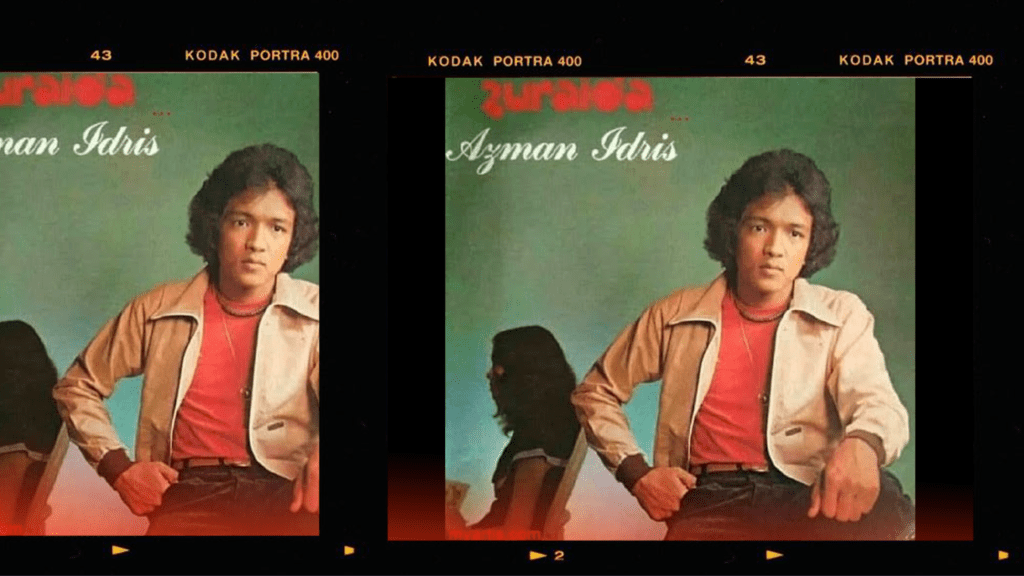
The song is none other than “Zuraida” by the late 70s singer Azman Idris.
The thing about most TikTok hits is that it can be almost too easy to notice which viral songs are sculpted to be overnight sensations. More often than not, the lyrics or production are made for the sole purpose of tasting that 15 minutes of fame, predicting teenagers gleefully dancing to their formulaic, lacklustre beats. But unlike many other TikTok hits in Malaysia, Azman Idris’ debut single rise to virality seemingly came out of the blue. The naturally flirty yet shy vocals of its narrator, singing about the first time he met and fell in love with a girl, imply that whoever is behind the song had no clue that it would go popular again, 45 years after its release.
Its virality could be traced back to “PP at Bukit Tabur,” a track by YBJ, a rapper from the hip-hop collective 53 Universe in collaboration with rapper Akkimwaru and producers DKyoumadethis and Meorey. The track samples the first verse of “Zuraida” as its intro before transitioning with a whoosh blade sound slicing through the air into a song about a private party in Bukit Tabur, Taman Melawati. The song became an instant hit, accumulating nearly three million streams and counting on Spotify alone. It garnered mass attention initially during Hari Raya, with users using the sound to transition themselves from messy, makeup-free faces to fresh, new clothes, all polished for the holiday.
Speaking to YBJ, he was drawn to the beats made by DKyoumadethis as he understood the appeal of combining old songs into modern hits, thus giving the bonus point of reaching a wider audience. Still, the sudden popularity was a surprise. “PP at Bukit Tabur was never intended to go viral,” he said. “We had bigger expectations for other songs in the album, so the reception has been a surprise for us.”
But instead of sticking to 53 Universe’s remixed verse and moving along with it, people started to get curious about the sample origin. This possibly led to the discovery of the original song posted by a user named @retromusic_5, an account dedicated to sharing Malay hits from the 70s to the 90s. Posted back in 2022, the video for “Zuraida” now has over 200,000 views and accumulated over 37,000 user-generated content.
Interestingly, the song is also not available on other streaming services except YouTube, where it has at least two million views. Over 25% of those numbers were gathered in May 2024 alone. Scroll through the comments under the video, and you’ll see people of various ages announcing that they came from the future. In our conversation over the phone, Azman Idris’ son Aizad Azman said that he too was surprised by the sudden popularity of his late father’s biggest hit. According to Aizad, the song on YouTube was first posted by his uncle in 2012, who wanted to ensure that Azman Idris’s legacy could continue on digital platforms, as the physical copies, if available, would be miraculously found at pasar karat as the record label that produced it has ceased to exist.
The song’s sudden rise to popularity this year caused a ripple effect, making it fascinating to uncover the sources that contributed to its viral success. Reading through the comments on YouTube reveals that people discovered the song from various origins. Some came across it through the 53 Universe track, while others found it via a content creator who was blown away by the sample. The most unlikely source of all is a cover by AI-generated vocals of P. Ramlee, Sudirman, and Jamal Abdillah, which stresses the need to educate people about the ethical issues of using AI for song covers, especially when the original artists could’ve really benefited from more spotlight — but that’s a conversation for another time.
But “Zuraida” was far from a hidden gem when it first emerged. Released when he was merely 19 years old, Azman Idris’ single became an instant hit that posed a challenge to “Musliha” by Othman Hamzah, another hit produced in 1979. “Zuraida” not only stayed on the charts for some time but also maintained its popularity alongside the biggest song of the era, “Rindu Bayangan” by the band Carefree. Azman then released another two albums before stepping out of the mainstream limelight. He pursued his career as a singer and was a long-time resident performer at MONrods Restaurant in Kulim before he passed away in 2021.
Forty-five years later, it’s startling to witness how a debut single from a young singer in the 70s managed to find its way into the hearts of today’s teenagers on TikTok, while allowing the older generations to share their nostalgia-filled anecdotes of how “Zuraida” once played a part in their life. The virality of this track reminds me of the global sensation of “Plastic Love” sung by the queen of Japanese city pop, Mariya Takeuchi, an underperforming disco-funk song when it was released in 1984 but slowly crept its way into everybody’s YouTube algorithm, rightfully so, and later exploded into millions of sales and streams.
While “Zuraida” is far from being a global sensation — it has slowly caught the attention of a few international TikTokers — its success suggests more local artists across diverse genres could gain from sampling songs from past generations. Of course, 53 Universe isn’t the first one to do this; see Malique’s sampling of Mona Fandey’s “Ratapan Anak” for his comeback single “Sedih Hati” or even “Licik” by K-Clique’s Tuju sampling M. Nasir’s “Keroncong Untuk Ana”. And in a time where the art of music discovery is almost lost, it’s nice to see a 45-year-old song that was once a hit not only hold its influence over the decades but also drive curiosity, more song discovery of similar genres, and perhaps a trend in the future of sampling old hits, allowing them to transcend generations. Sure, trends get bloated fast enough, but maybe this is the trend I hoped to see served more on the charcuterie board, serving famished guests, old and young, till we all are so sick of it. Isn’t that how viral trends work?
Know an odd place you think we should cover? Drop us the (web) address on noisyheadspace@gmail.com


 noisy headspace
Leave a comment