
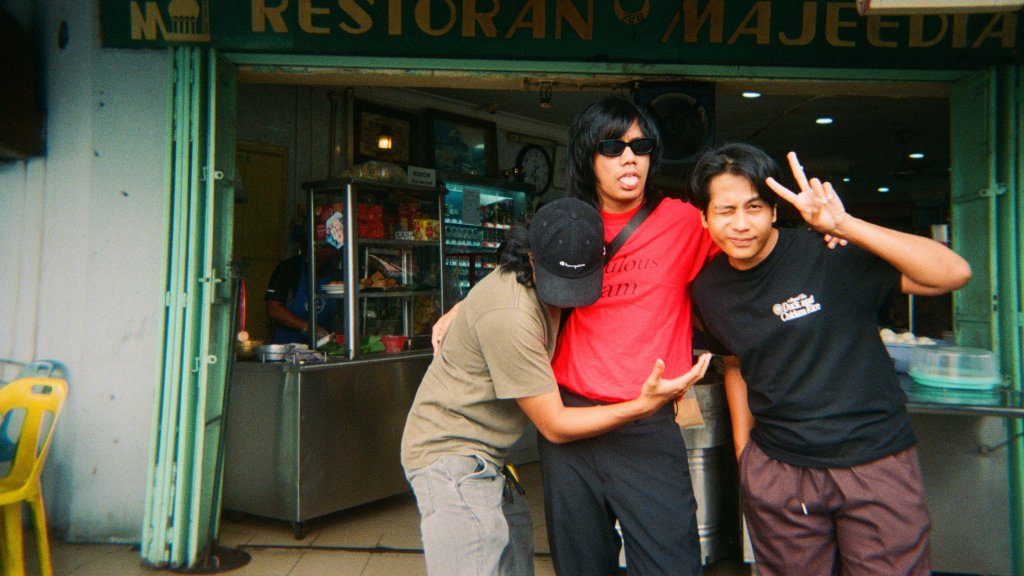
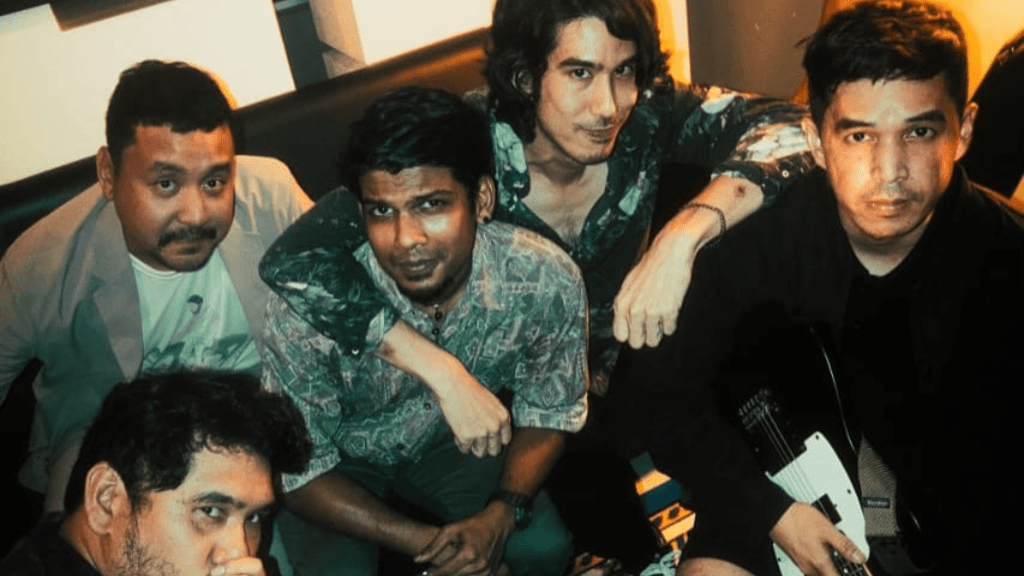
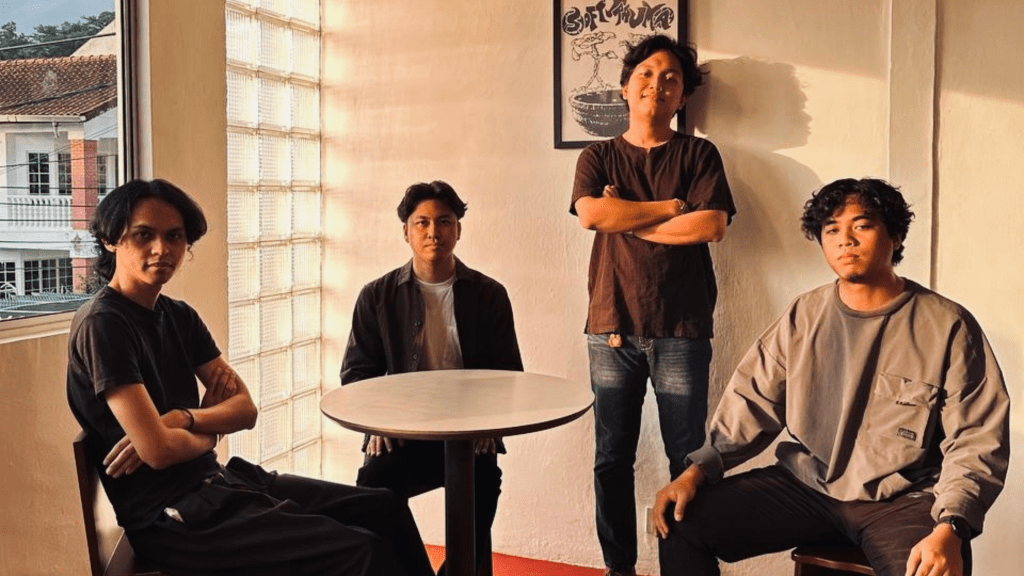
Disposable Diary is a Noisy Headspace project where we send disposable cameras to bands, allowing them to document their daily lives in a candid way. For our debut edition, we feature FUGŌ, an indie pop band that has just wrapped up their tour.
FUGŌ is everywhere these days. In August, the trio released their much-anticipated debut album 99, already hailed by fans as the ‘album of the year’. 99 blends nostalgia with a modern touch, not from indecision, but as the natural outcome of years spent refining their sound — from Bandcamp demos to their 2021 self-titled EP. The result is an album that captures FUGŌ at their best, or at least the best we’ve seen so far.
Soon after the album dropped, FUGŌ hit the road for a four-state tour, starting at a cozy café in Alor Setar, Kedah. They had to cancel their Kuantan show due to scheduling conflicts, but went on to play sold-out gigs in Ipoh and Kuala Lumpur. The Batu Pahat stop, in particular, made a lasting impression on their keyboardist, Fai.
A few days before FUGŌ hit the road, I sent them a disposable camera, asking the trio to document their journey. In this interview, we discussed their resistance to streaming numbers as success stories, their love for touring and an eerie incident in Batu Pahat. The interview has been edited for clarity.
Farhira: How early did you guys plan for the tour?
Kayrol Ami: Uish, awal. Even though it’s a simple tour, we started planning properly back in February or March. Some people want to wait until the album’s out, but we wanted to celebrate it right away. It’s our way to create the hype.
Farhira: Was it challenging to go on tour, like, financially?
Hakim Kamal: It was challenging, but not that bad.
Faizul Hakim: We’re rich. *laughs*
Ami: We got a lot of support from friends. Like, our venue in Kedah was sponsored. Everyone just did their part, so everything worked out. Whatever we earned from the first EP and merch sales, we saved up for the tour, and just rolled with it.
Farhira: How did you guys decide which states to perform in?
Ami: We had to change the dates multiple times. Originally, the tour was set for early July, but it clashed with some schedules, so we had to keep adjusting.
Fai: Wait, why didn’t we include Perlis or Penang?
Ami: Budget constraints for just five states.
Fai: So, we’re not that rich after all.
Ami: If we added Penang, Perlis, or Terengganu, the cost would’ve hit almost 100k.
Farhira: Do you guys think there’s demand in those states?
Fai: Penang? Definitely. Probably more so than other places, especially since we haven’t performed there yet. In Alor Setar, people came from Penang, and some from Perlis too. So yeah, the demand is there. Penang’s a culturally rich place. Even if demand wasn’t that high, with enough promo, I’m sure we could sell the tickets. From a logistical standpoint, we did Alor Setar in the first week, then shot over to Ipoh on the weekend, so adding Penang would’ve been tough.

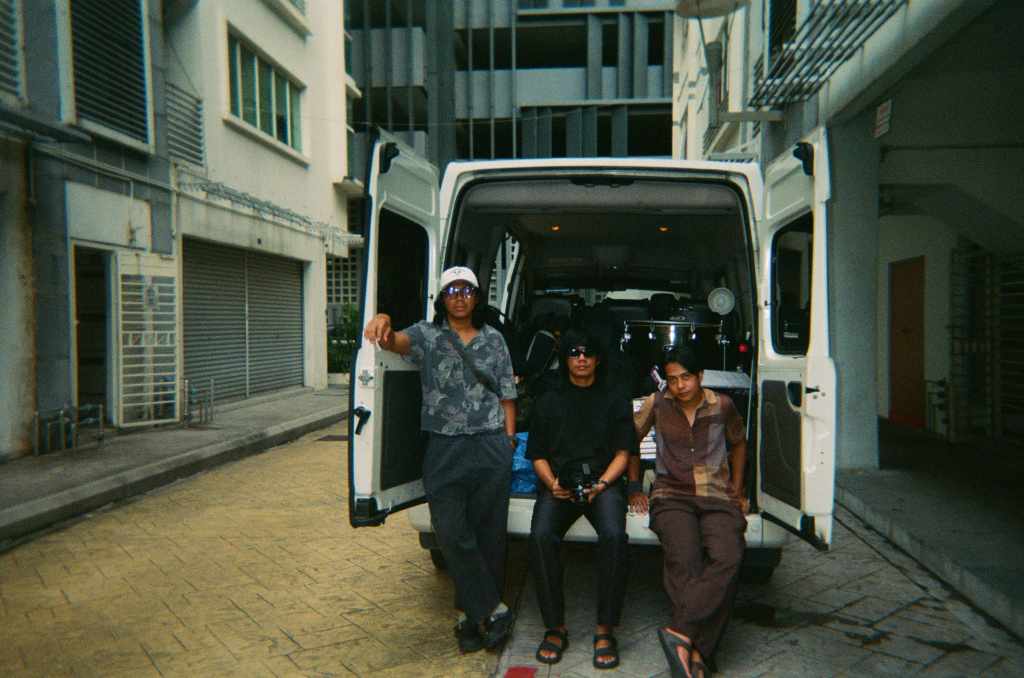
Ami: This was at Pintu Sepuloh Cafe, before the Alor Setar show.
Fai: This moment was all about preparing. For us, it was the first stop of the tour, and everyone was in high spirits because we didn’t have a set workflow yet. We were excited, like, “What’s next? What’s next?”
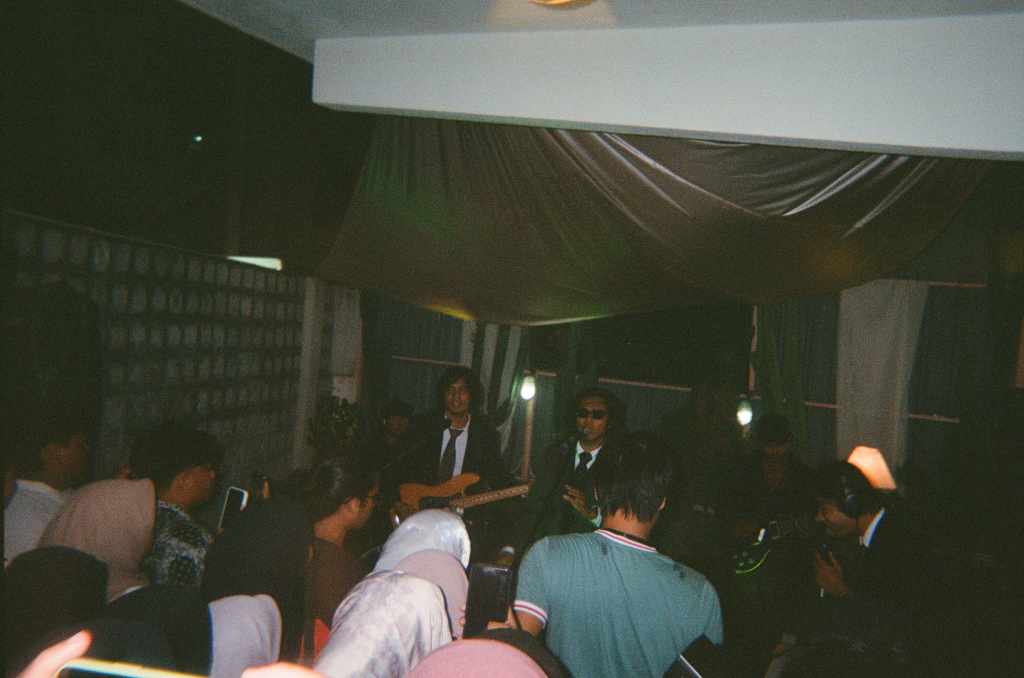
Fai: If you look up at the flagship, it was raining then. We weren’t sure whether to start or delay the show.
Hakim: We went ahead, and the rain didn’t stop, tapi makin lebat.
Fai: Between songs, we were poking at the flagship to get rid of the water.
Ami: Kitorang macam hardcore lah.
Hakim: Macam movie Man Laksa pun ada.
Farhira: Were you guys surprised by the reception in Kedah?
Hakim: Quite surprised, yeah. We didn’t expect that kind of crowd, people who really support FUGŌ, buying merch, taking pictures. We had never been to Kedah before. So, it was our first time, but it was overwhelming seeing that level of support.
Fai: Yeah, Kedah was where we had our first meet-and-greet. Besides the ticket buyers, we didn’t expect so many people lining up for the meet-and-greet. We were like, “Wow, rasa macam artis doh!”
Ami: A lot of them came specifically because they asked us to come to Kedah, and we finally got to meet them in person. In the beginning, kitorang agak risau lah.
Hakim: Ami was especially nervous about whether anyone would even buy tickets in Kedah since it’s his hometown.
Farhira: During the meet-and-greet, did anyone tell you how your music changed their life?
Hakim: The one I remember most was a guy who listened to our song Pentas Sandiwara with his friend. That friend passed away several weeks later, and he said every time he listens to the song, it reminds him of his friend. Another person came just to tell us they screamed and cried to our song when they were going through some tough times. It really hit us because it felt so genuine.
Ami: Yeah, when we performed, we could see people crying.

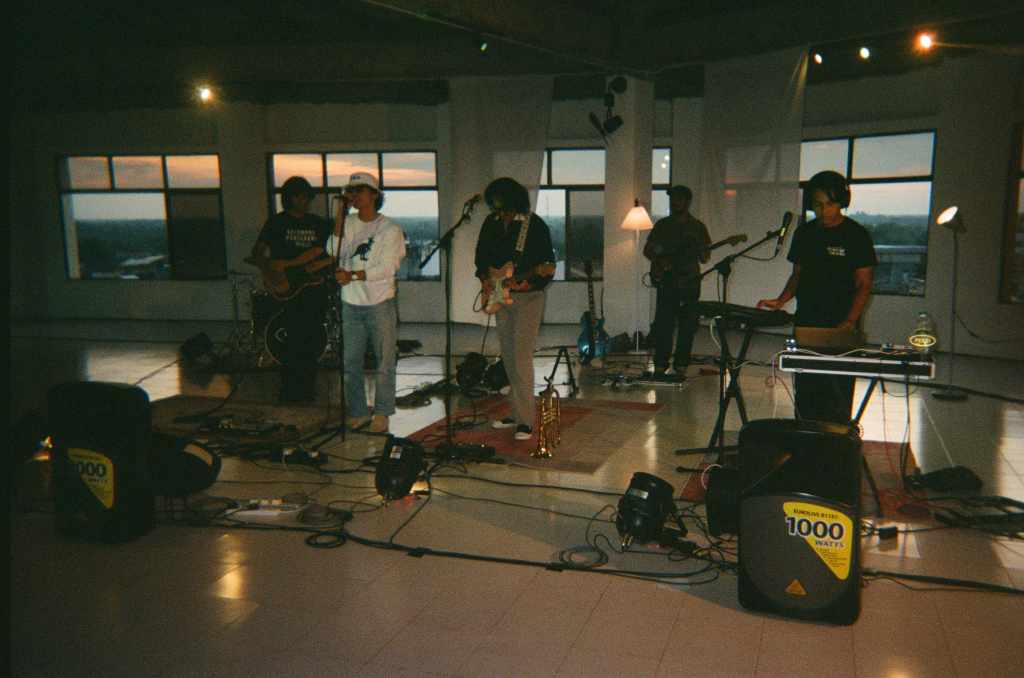
Farhira: Where’s Fai in this photo?
Fai: I went upstairs. Bukan nak cakap I ada anxiety tapi I wanted to get used to the venue before performing because I always worry about a lot of things during the show. Is my laptop okay? Are my instruments fine? So I prefer to get familiar with the space beforehand, to avoid being overwhelmed. If something malfunctions, at least I won’t panic.
Ami: Fai handles a lot of the technical side. Even the lighting, he’s the one who takes care of it.
Hakim: Jantung performance ada kat Fai. Kalau Fai break down, kita semua break down.

Farhira: What do you like most about Ipoh?
Ami: The cool thing about Ipoh is that even after the tickets sold out, people still came just to buy merch. They bought the album too.
Hakim: Ipoh’s first and foremost about the food. Then, the crowd. They were loud, singing along without holding back. Some crowds save their energy, but Ipoh was all-out.
Farhira: Why did you decide on a small-scale, intimate tour?
Hakim: We didn’t even know if we had fans outside KL.
Ami: Most of our Spotify listeners came from Indonesia and Taiwan actually, so we were scared to book a big venue in case no one showed up. Even with a smaller venue, we were still worried.
Farhira: I think some artists might assume millions of Spotify streams means they can confidently book bigger venues.
Fai: Because a digital footprint doesn’t always reflect a real-life crowd. If you ask me, in today’s context, a million streams doesn’t mean much. Those streams are spread across the world, and listeners don’t necessarily go to gigs.
Ami: Nanti you pergi turun ke kedai burger kat bawah and tanya kalau dia pernah dengar lagu FUGŌ. Mesti dia tak pernah dengar.
Fai: Also, when we look at how people discover our music, most don’t intentionally search for us. It came through the algorithm. So, that doesn’t really represent our entire discography.
Farhira: This is in Batu Pahat, Johor?
Ami: Yeah, but the original venue wasn’t here. It was supposed to fit only 80 people, but the day before, the owner told us we could switch to a different place. We had 8-10 hours to sell more tickets, and we moved here. The new venue was bigger than Rumah Tangsi, and it was an abandoned building.
Fai: Personally, Batu Pahat was my favorite. I loved the venue, but even more, I liked what the locals did for the town. When we think of cultural cities, we think of Ipoh or Penang. No one expects Batu Pahat.

Farhira: I think we’re seeing rising bands from Johor.
Fai: Yeah, Johor, especially Batu Pahat. They have an art community that makes Batu Pahat a cool town. Imagine Concubine Lane in Ipoh, but now it’s Batu Pahat. And it’s not even sponsored by corporations, it’s just the locals doing it themselves. I didn’t expect that, even as someone from Johor.
Ami: Tapi tempat tu rasa ‘keras’ sikit.
Hakim: Yeah, mula-mula sampai memang rasa tak sedap badan. After the show, masa kita tengah packing barang, we took the elevator down. It was one of those old lifts that you can switch the lights on and off. There were four of us, one in each corner. Then our drum tech, Mirul, turned off the lights. When he switched them back on, our guitarist saw an extra person sitting in the middle. Tapi yang kelakarnya, Mirul turned the lights off again. So we rode down in the dark.

Farhira: Does Rumah Tangsi fit the vibes you’re going for?
Hakim: We want that vintage feel in our music and shows. We want listeners to feel ‘nostalgic,’ so Rumah Tangsi really fits that whole ‘nu-vintage’ vibe.
Fai: Yeah, if we do a radio interview and they ask about our genre, we’ll just say ‘nu-vintage’ *laughs*
Hakim: It’s all about that nostalgic feeling.

Fai: Our crew really helped us out with the props. When we arrived, they’d set up a bed, sofa, and even a bathtub. Before that, we had a meeting where we talked about wanting a homey vibe, and they totally nailed it.

Farhira: You’ve had a big year. What’s next for you guys?
Ami: Tak sure. We just want to have fun and take things slow.
Fai: This year’s been packed with on-the-ground events. Maybe next year we’ll start writing for the next album. Hakim already has a concept in mind. But for now, we’re just focusing on meeting new people and promoting the band.
Stream FUGŌ’s 99 on Spotify:



 noisy headspace
Leave a comment