
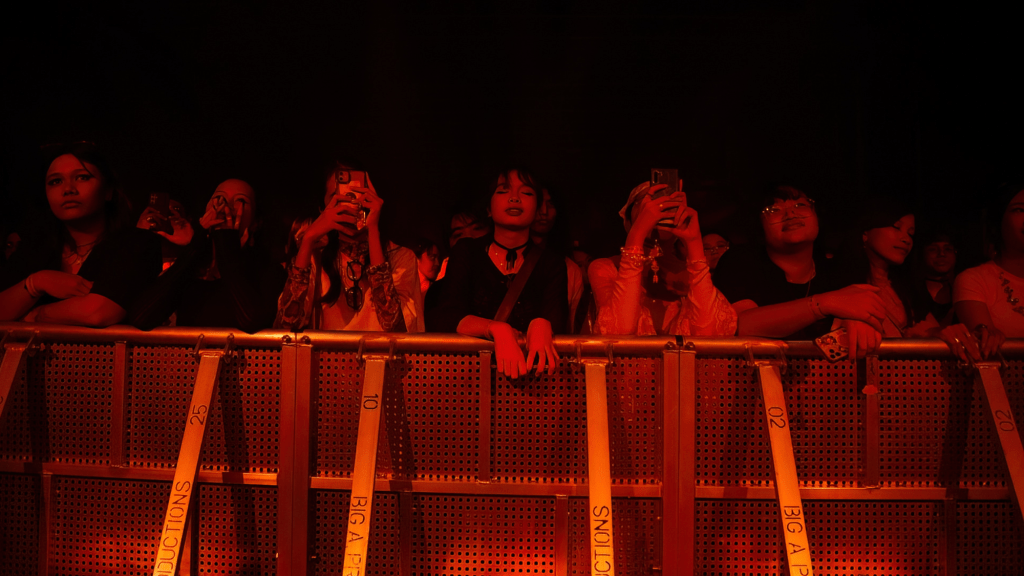
It’s that time of the year again: The season of Women’s Day, and with it, a surge of all-female gigs. Organisers rally behind the occasion, curating lineups that spotlight women in music. The posters go up, with some names you barely recognised at other gigs.
But all-female gigs aren’t exclusive to Women’s Day. In late 2023, rapper Zamaera launched Queendom Fest, Malaysia’s first all-female music festival, aiming to provide a platform for local female artists after recognizing “the lack of female representation in local festivals.”
“The music scene is ever-growing, and we’re seeing more and more emerging female artists. I feel that should reflect in the opportunities provided for female creatives,” she stated.
All-female gigs are an occasional spectacle — either popping up annually on Women’s Day, on a random weekend in the name of celebrating women in the scene, or when local organisers crowdsource gig ideas and someone inevitably suggests an all-female lineup. Pink-themed posters, covered in messages of empowerment. You could detect one even before you checked the lineups.
I love the idea of all-female gigs. There’s something undeniably powerful about bringing women together — not just to perform but to celebrate each other’s presence. Some organizers take it a step further, ensuring inclusivity beyond the stage by hiring women to run the soundboard, shoot photos and manage production.
But as much as it fills me with joy, the existence, or rather the normalisation of all-female gig also leaves a bitter taste. This hit me when I realise most female musicians booked for all-female gigs are rarely booked for other gigs and festivals. For some reason, some organisers would rather pack a lineup with female musicians for one night but never include them in their regular gigs or festival lineups. The message is clear: women belong in the scene, but only on special occasions.
I remember when this issue was raised in a 2020 podcast called #RuangBertamu. The episode featured an all-female lineup of guests — Hani & Zue, Kina of The Impatient Sisters, Takahara Suiko of The Venopian Solitude and Leaism — who spoke candidly about their struggles as women in the independent music scene.
Singer-songwriter Leaism specifically addressed the problem with all-female gigs, pointing out how they can isolate female musicians rather than integrate them. She described how these events often make women feel like they exist in a separate category — one that allows them to be taken less seriously or seen as outsiders in the scene compared to their male counterparts.
She asked: “Why, when it’s an all-female gig, is it not considered a normal gig? Why does it suddenly become a ‘ladies’ night’?”
Such is the reality of a male-dominated scene. In every boys’ club, women have to prove their greatness just to earn a spot on the lineup. Men can be mediocre and still get booked for your favourite music festival. But women’s inclusion is often diminished, their presence treated as something that needs to be justified — otherwise, it’s reduced to a symbolic gesture, an obligatory nod to diversity rather than a genuine recognition of talent.
Maybe that’s why we’re so comfortable throwing all-female gigs — because it gives the illusion that we care. That these occasional ‘ladies night’ should be enough. That by curating a night of women on stage, we can pat ourselves on the back and say the scene is inclusive. We want to prove that this space welcomes more than just straight men, so we create these gigs as a supposed safe space — one where women can dance, party and mosh without fear.
But why is the responsibility of making the scene safer always placed on women? Why can’t we create a safe space at any usual all-bro gig, too?
And why is female representation still treated as a special occasion rather than the norm — especially when women have always been here, occupying the floors, showing up, listening and supporting just as much as the men?
In 2018, Abbey Carbonneau launched Book More Women, an online movement that redacted the names of all-male acts from international music festival posters — Coachella, Rolling Loud Miami, even Tyler the Creator’s Camp Flog Gnaw. The result was a stark visual: without the men, the lineups were nearly empty.
Beyond just exposing the problem, Book More Women became a tool for accountability, tracking festival lineups over the years. Music fans took notice, demanding better representation from their favorite festivals. It forced the industry to confront a reality it had long ignored. Huston Powell, who books artists for Chicago’s Lollapalooza Festival, admitted that seeing his lineup stripped of male perfomers was a “reality check”. Otherwise, he thought he had met his diversity goals. He hadn’t.
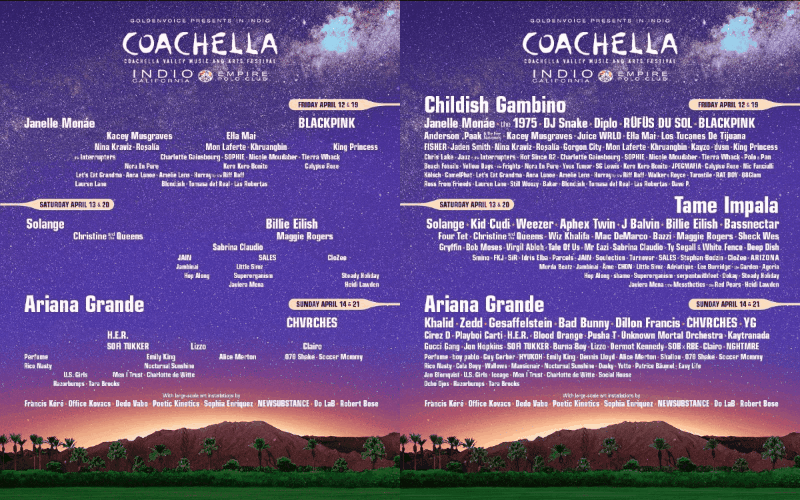
In an interview with Rolling Stone, Carbonneau reflected on why Book More Women started: a simple attempt to start a conversation.
“It felt like a tiny push of a big, complicated, frustrating rock, but maybe that’s all it takes sometimes to get things moving,” she said.
Here, that rock hasn’t moved much. Most of us would rather continue circling and ignoring the same big rock, layering it with every other neglected issue while the same lineups, the same faces and the same excuses remain. All-female gigs are great — a moment of celebration — but they shouldn’t be the only spaces where female artists get to perform. Representation shouldn’t be an occasional gesture; it should be the norm.
So every time we ask the same-old question — “Why can’t the scene progress?” — the answer is right in front of us. The real question isn’t why things haven’t changed — it’s who has been allowed to stay comfortable in the status quo. Maybe it’s time to stop deflecting, stop waiting for outside pressure and actually listen. Look at the lineups. Look at who gets the mic, who gets the stage, who gets the pass. And ask yourself: Who have I been overlooking?
 noisy headspace
Leave a comment