

By Zim Ahmadi
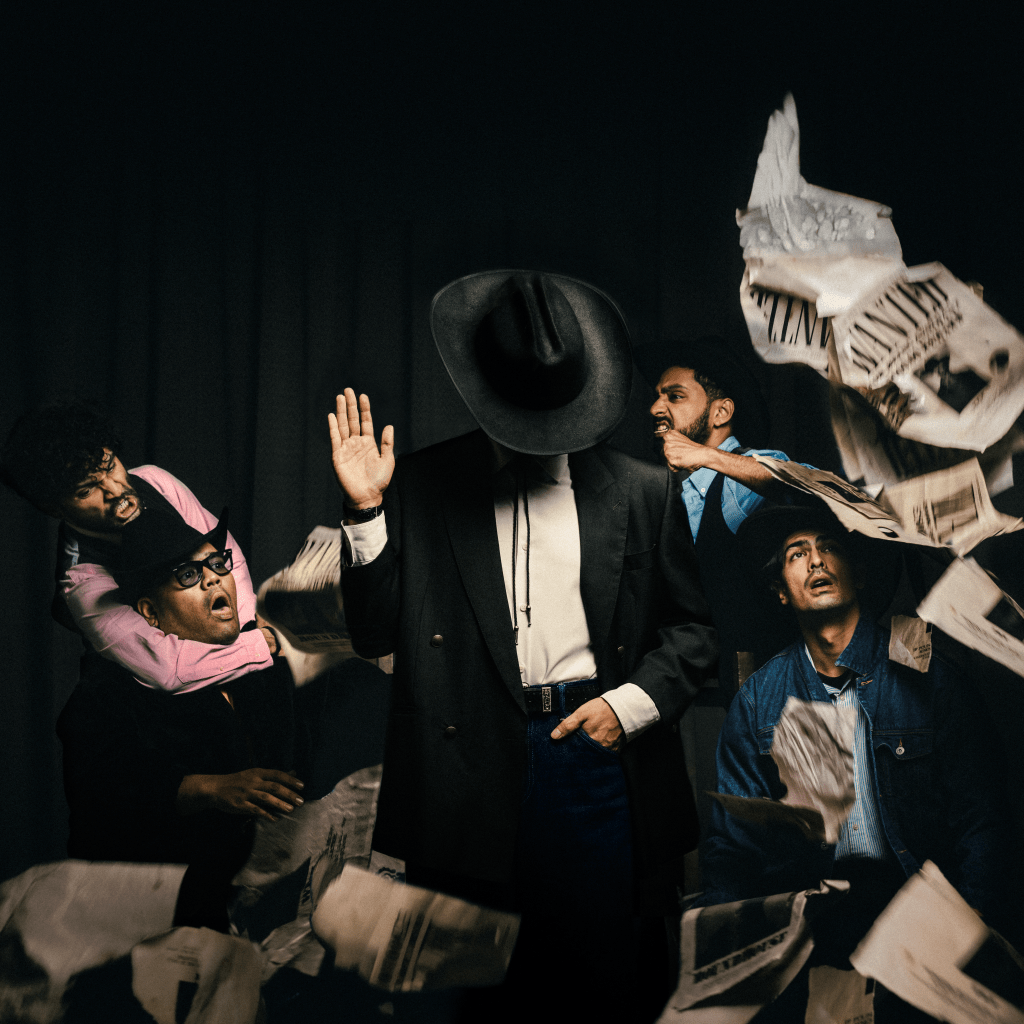
This is an excerpt from the essay “What is The Soundtrack To Your Dystopia?” by Zim Ahmadi taken from the book Algorifobik: Alternatif Resah Algoritma. Published by Rabak Lit, the book will be officially launched at Kuala Lumpur International Book Festival 2025 on 25 May.
In a world where mindlessly scrolling can trap you into an endless conveyor belt of absurd memes, short skits, soulless, trite marketing gimmicks, cat videos, fun facts about fishes and then violent depictions of an ongoing genocide – what is your soundtrack?
From 2020 up until now, the answer for me has been hyperpop.
A “singular” definition of hyperpop doesn’t exist. Joe Vitagliano says in American Songwriter that hyperpop is an “exciting, bombastic, iconoclastic genre – if it can even be called a “genre” — and has “saw synths, auto-tuned vocals, glitch-inspired percussion”. Even the ‘textbook’ definition doesn’t exude much confidence.
Hyperpop is inherently oxymoronic. Whereas “pop” is often used as a shorthand for “conventional”, “palatable”, and “mainstream”, artists that are given the name hyperpop (sometimes taken begrudgingly) take the templates of pop and stuff them in a blender. All of the elements ricocheting, mutating and spiralling at the centrifuge of kitschy, catchy sensibilities alongside more experimental, abrasive and aggressive sounds.
Your smartphone wants you to die inside while it hypnotises you with an endless stream of content that you’ve managed to deceive yourself into thinking is useful or productive. Such crippling ADHD-inducing insanity needs insane music. Thankfully it exists here in Malaysia – with all of its glorious, multifaceted contradictions.
You wouldn’t be able to discern that just from googling “hyperpop in Malaysia”. At best, you will get an interview article with Lil Asian Thiccie. Still, 2020 was the year I started loving hyperpop, not just based upon international releases like Charli XCX’s How I’m Feeling Now or 100 gecs’ 1000 gecs, but also from my excitement with local artists that incorporated the sound – made more appropriate by the looming End Times panic surrounding the 2020 pandemic.
Lil Asian Thiccie’s EP VR-GF is undoubtedly one of them. Thiccie rose in the local scene through hip-hop tracks like “hiao” (feat nyonya business) and “GET MUNNI” (feat. Zamaera). In 2022, she gradually, and then completely, swapped her braggadocio bars and lyrical hip-hop acrobatics with the bass-boosted, glitchy rainbow of hyperpop. VR-GF showcases unrestrained, cyber-cunty hedonism mixed with party-girl pop direction. Reminiscent of Charli XCX, Shygirl but with her own wonderfully garish, sexuality and fun in tracks like “HOLE” and “xXXbraiinnsssXXxx” – like how a serenade should sound like when faced with the torrential amorality of a society facing collective insanity. It’s addictive. In a video call conversation, she explained hyperpop as a space for anyone rebelling against a norm, whether it be gender, cultural expression, aesthetics or sound. Beyond the pale of post-ironic experimental pop is the smoother, lusher but no less forward-thinking soundscape of Shelhiel’s 2020 EP SUPERSTROBE. His single “STAR” transported listeners through a Y2K time portal of Frutiger Aero, cosmopolitan dance-pop and neo-R&B packaged in a club music aesthetic and expressed with subversive, glamorous androgyny. It was a launching pad for Shelhiel’s career, as it brought his work to the attention of Nowness and Eastern Margins, which connected Southeast Asian electronic and pop music into a bigger Asian sphere.
I-SKY’s WAKTU is the third one. Calling the prolific producer’s 2020 album hyperpop barely scratches the surface. More accurately, it was hitherto the most comprehensive and exciting library of contemporary electronic production in Malaysia, boasting an amazing array of features from the alternative electronic, hip-hop, urban pop scene (including amongst many, Shelhiel, Lil Asian Thiccie, Orang Malaya). It also incorporated a panoply of sounds from drum and bass to dubstep to neo-soul and even grimey, drill aesthetics before it became mainstream.
These releases pushed me to retrace my steps to acts like Orang Malaya and Ichu, who are more hip-hop forward, yet with consistently bold and innocative productions. BASTARD, (aka Farhan of HOAXVISION) and his track “NO ONE LIVES IN KUALA LUMPUR” captured the chaotic, people-averse development of the capital city in it’s own self-aware, wavey, stream-of-consciousness way. This led to its own rabbit hole which stretches toward the past and the future.
The term “hyperpop” has been around for quite a while, and used to be more popularly interchangeable with the term “bubblegum bass”, especially in the late 2000s with the rise of PC Music, including A.G. Cook, Charli XCX, Hannah Diamond, Danny L Harle, etc. Thanks to Spotify’s hyperpop playlists, the resurgence of vaporwave aesthetics and Y2k nostalgia, the term hyperpop truly became colloquial in 2020 with new acts like 100 gecs – to the gratitude of some, and to the annoyance of many. Its legacy and lineage however can be contextualised within a much broader term – “Internet Music”.
It’s not just simply “music that can be found online” – that would apply to every single genre under the sun. It’s music that can only exist because of the Internet, and the “very online” cultural phenomenon propped up by ironic shitposting, meme-creating, DIY-community-building that is simultaneously anti-algorithm but also very, very much part of the internet-social-media-landscape. It’s absurd amateurism colliding with progressive professionalism. It’s the byproduct of a world where kids download their own DAWS and make beats on their computers. It feels ethically punk, but also gratuitously welcoming of escapist and hedonist dance culture, all within the realm of cyberspace (hence cyberpunk, credits to Michael Pondsmith). It’s not just “electronic music” which is an even bigger hydra that deserves an entire series of books by themselves.
The Eras
In the process of writing this, I thought it was possible to create a rough timeline over three separate time periods for the chronology of internet music and hyperpop. But it’s impossible to talk about without truly embracing the large network of artists that made the sound and aesthetic of hyperpop come to life, at least in Klang Valley. It’s impossible, but here’s a heavily truncated insight for those looking for where to start.
2011 – 2015
As print music media died and people stopped buying magazines, people started finding more and more of their share of culture online. This dwindling last-ditch heyday formed fertile ground for the rise of a new generation. Malaysia was entering a post-Myspace age. The Arab Spring and Occupy Wall Street (as well as arguably, BERSIH in Malaysia), made Facebook and Twitter more and more mainstream. Your favourite troll account and celebrity now shares a timeline with some country’s head of state. And the exciting, eclectic DIY collective HOAX VISION began to take shape. Influenced by the ethos of independent Atlanta labels like Awful Records, HOAX VISION came about from Farhan (aka BASTARD)’s “distaste towards band music”.
“The context here was that no one was making music in my circle unless they were doing it professionally. Those making music without studio sessions – that skipped all of the steps that were taken to make music at the time – were just us and Akhyla probably. We made a lot of music really fast.”
Akhyla (or Akhyla Soundsystem) shared the same DIY ethos with HOAX, but they consisted of more musically-trained and detail-oriented producers in contrast to the casual and spontaneous unfilteredness of HOAX. Akhyla had the likes of VMPYRMYTH (founder of the collective alongside Aaron Tan), Shelhiel, Jimi (aka Reddi Rocket), DecemberKid, YAHNA, etc. and HOAX had Orang Malaya, Bastard, FRS, VIKTORIA. When this perception of AKHYLA as more “technical” was mentioned to Shelhiel, he said “actually we were all just a bunch of nerds”.
Other names too, like the collective 50490 featuring Moslem Priest, Mysteriz and S|Co. There was so much cross-collaboration between these collectives as HOAX shows, for example, would also feature Akyhla and 50490 artists. This period was generally alive with events on top of the DIY underground parties, like Raising the Bar, organised by Jin Hackman (who also had his own Seapunk collective, CSBTea. “We were obviously ripping off Odd Future”, laughed Jin), Urbanscapes and many more to name. What was interesting was the role media, especially urban outlets like Juice, Timeout and Redbull, played in elevating the world of innovative electronica in Malaysia. Farhan HOAX explained, “I mean Timeout and Juice also needed content. We were just releasing things super fast”.
At the heart of it all, was SoundCloud, which fueled the vibrancy and increasing democratisation of music creation. There was such an abundance of music it’s hard to choose a Nevermind or a Never Mind the Bollocks or the Chronic of this period. Yet it’s hard to not regard HOAX mixes like watershed compilations of the new sound, like Bastard Malaya’s “Not Really Us”, HOAX’s “Hates U”, ZSYIA & Viktoria’s “Saccharine” as well. All of this represented that period’s zeitgeist in their own special way.
Read the full essay in “Algorifobik: Alternatif Resah Algoritma”.
 noisy headspace
Leave a comment