
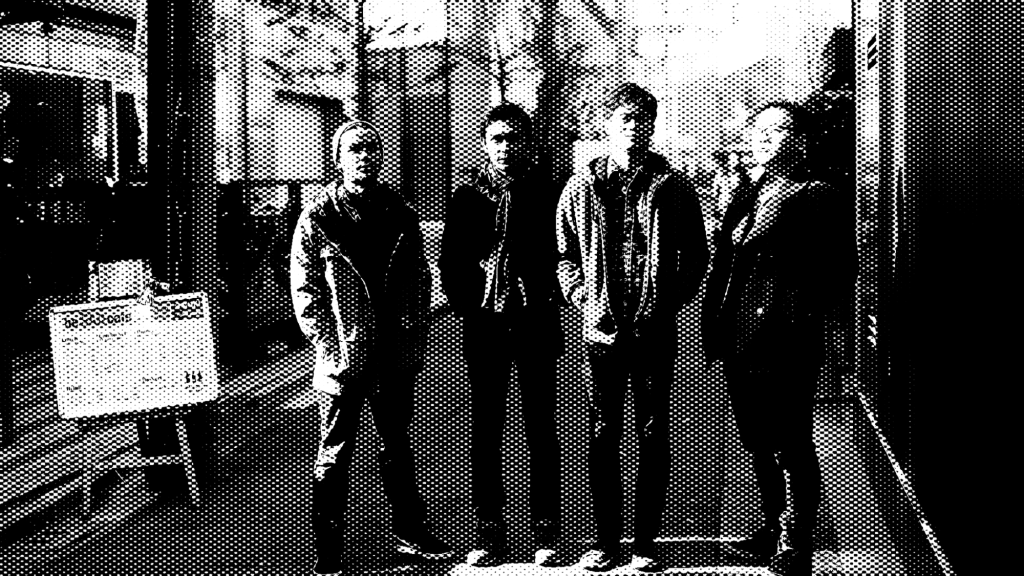
Commemorate! by Dirgahayu marks its 10th anniversary this year. First released in Japan in March 2015, followed by a Malaysian release in May and a vinyl LP in July, the record’s impact still reverberates a decade on. It’s one of those rare albums where everyone who loves it remembers exactly where they were when they first heard it.
For me, I was alone in my room. First lying down, then sitting up, trying to focus on every millisecond of “Bahawasa-nya.” I wanted to listen to it right, whatever that meant. The record doesn’t demand your attention; rather, it’s the listener who chases its approval.
Commemorate! is a herculean entity. An album that didn’t just earn lifelong fans, but quietly shaped a generation of musicians who’ve since pinned it to their creative moodboards. A decade on, its influence continues to ripple through the scene.
To mark its tenth anniversary, I reached out to several people in the community to ask: what does Commemorate! mean to you — ten years later?
Munn Lim, Program Curator of Live Fact
I dug through my boxes just to play this CD again while writing this. Its once pure-white sleeve has long since yellowed, and the shiny disc is now speckled with tiny scratches. This CD used to accompany me on countless drives to and from work—those brief car rides that were entirely mine. I vividly remember the blinding sunset after work, just like the dazzling golden text on the CD cover: كوالا لومڤور, 吉隆坡, கோலாலம்பூர். Those three lines reminded me of my identity in a city I never quite belonged to, and of my early, naive days in the local indie scene.
Dirgahayu’s Commemorate! was the first local album that truly blew my mind and made me fall madly in love. The way the music tries to find order in chaos and how that order skips a beat like a missed heartbeat has always fascinated me. It was the first time I discovered that music without lyrics could be so sharp and powerful, like something you could fight through all injustices with.
I was lucky enough to catch a show at Live Fact in 2017, where drummer Seikan, briefly back from Japan, made a surprise appearance for a partial but unforgettable reunion. Even in its imperfection, the memory remains beautiful and lasting.
Ian Frances Khoo, The Filters
I was in college and a friend of mine had heard “Kyu/Ju Roku” on BFM on the way over and we listened to it together during our lunch break. There was no doubt about it, I was instantly hooked. My initial thought was: “There’s no way they can do this live. There’s just no way.” Much to my very delighted surprise, as I went down the rabbit hole of live performance recordings, the band somehow managed to pull off the impossible.
Not only were they good…arguably, their live performances had a certain aggression and kinetic energy that the album versions couldn’t match. And what it proved to me was that, it is very much possible to pull off complexity live. But there’s only one way to go about it and that is through painstaking and arduous commitment to your craft. When they played live, they never made it look easy. You could very much tell how many hours were spent in building the muscle memory and fluidity that they had so rightfully earned.
The album as a whole is an exercise in maximalism and I think that it taught us that sometimes more is MORE. While I understand that there is beauty in simplicity, I had never heard anything as abrasive and in your face that was made locally here. Upon first listen, you’ll notice that every rule or convention pertaining to songwriting is instantly thrown out the window. They had a sound that just refused to conform to any conventional norm. The moment you begin to lock into a singular groove, the band subverts expectations by crudely transitioning into the next aural vignette, with each section somehow upping the ante of the movement that came before it.
The guitars speak to each other almost in tongues while the bass manages to find pockets of space to call its own. The drums create rhythms that your body fights against but is undeniably a perfect fit for this orchestrated chaos. And when the composition calls for all four instruments to realign, the payoff is otherworldly.
I feel that the main takeaway of this album (and what drew me to it), is that the music never looks down on the listener as it strokes its beard of complexity. Commemorate! is an album that is better to be experienced rather than studied. It is unrelenting and raw in its presentation. It demands your attention and rewards listeners for their patience. If you’re willing to sit in for the ride that is every track on this album, you’ll be treated to its mind bending twists and turns.
It proved to me that, no matter how outrageous the composition or sound, people will be drawn to it. Because at the end of the day, they left everything they had out on any stage they graced. And that’s a philosophy and work ethic that we’ve tried to maintain in our own writing and performance. Seeing them push the boundaries to its extremities, left room for the newer generation of bands to not be afraid to test the waters in which we freely swim in now. We urge others to swim with us.
AlKamil Kamarludin, MIM
If we’re all living through the apocalypse of a nuclear war, and the government lets each person choose one album for the rest of their lives, I’d grab Commemorate! without hesitation. If I ever end up in a vegetative state, just spin Commemorate! by my ears, my brain would find its way back. That’s how deeply it’s wired into me.
Mohd Jayzuan, Multidisciplinary artist
Dalam sejarah muzik radikal Malaysia, ada banyak terbitan yang mencengkam dan bikin gundah segala rasa. Mendengar Commemorate! bukan hanya semata itu, malah menjadikan kewujudan diri serta kepala hotak tegang dan resah.
Terbitan ini meletakkan piawaian tinggi buat mana-mana band mahu bergelumang dengan math-rock yang datang selepasnya.
Commemorate! adalah tanda aras untuk semua kaki matematik. Kena pandai bikin kira-kira sendiri.
Pernah seorang kawan lama yang menyukai band-band seberang menyoal saya,
“Cuba bagi satu contoh band macam Hindia di Malaysia…”
Saya balas,
“Buat apa nak cari macam Hindia, kalau kita ada macam Akta dan Dirgahayu…”
Mak Wai Hoo, Founder of Soundscape Records
Before Dirgahayu, I was already a fan of Akta Angkasa, where Zulhezan was also a founding member. After they disbanded, Zul went on to form Dirgahayu with Efy and Makyie, and they toured several states even before releasing an album. Their first live video, Bahawasanya, went viral and immediately caught my attention. Soon after, they brought in Seikan to play drums, which really took the band to another level. The first time I saw them live, I knew I had to work with them and as it turned out, Zul was also looking for a label. Everything just came together naturally. Before releasing the vinyl, we put out a limited run of handmade CDs, followed by a digipak version. Both were very well received and sold out quickly, which eventually led us to explore releasing it on vinyl.
One thing to note: besides the incredible sound the band created, Zul is also known for his strong sense of aesthetics, which was reflected in the album’s cover art. That visual element added even more value to the release. The vinyl was co-released with Teenage Head Records; we pressed 300 copies, and they sold out in just two weeks! It’s definitely one of the most important albums, not just in the instrumental music scene, but in the Malaysian indie music scene as a whole. I still listen to it regularly, and it continues to make me feel proud and fulfilled. I’m so glad we got to be part of the project. When you listen to the songs, you can’t help but feel that this is the Malaysian sound and identity we’ve been searching for. There’s just so much creativity, energy and passion in it.

Akmal Uzair, Musician
The first time I discovered Dirgahayu and started listening to them almost religiously was through their The Wknd Sessions performance just last year. I can’t even remember which song was playing when I first clicked in, but I ended up watching the whole series and thinking, OMG, what just happened?! The entire performance felt like a conversation between musicians.
They made me crave something weirder, more provocative, just… different. One moment that stuck with me was during their live performance of “Istinggar” when the guitarist changed his freaking capo position mid-song. As a guitarist myself, I didn’t even know that was allowed! I’ve always wanted to embody that same musical spirit—the ability to communicate purely through instruments and sound, however you want. And that’s exactly what I’m trying to do now… or at least working towards.


 noisy headspace
Leave a comment