

This year, our writers share their music highlights and lowlights of 2024. Fadyla Ixora weighs in with her top tracks, biggest letdowns, and more.
Favourite Tracks of 2024:
- “Faten Kanaan” – min mafra’ el waadi
- “3scr3w3” – still house plants
- “Challengers” – Trent Reznor and Atticus Ross
- “Cry for Me” – Magdelena Bay
- “Killa Lumpur” – killamisha
- “Big Time Nothing” – St. Vincent
- “BITTER” – Lunadira
- “The End” – LUST
- “gairah – live from the fuck off” – BAP.
- “Sesak” – Jirapah
Favourite Albums of 2024:
- Perceive Its Beauty, Acknowledge its Grace – Shabaka
- Imaginal Disk – Magdelena Bay
- Still – Erika de Casier
- Brat – Charli XCX
- Cold Visions – Bladee
Most Played Song of 2024:
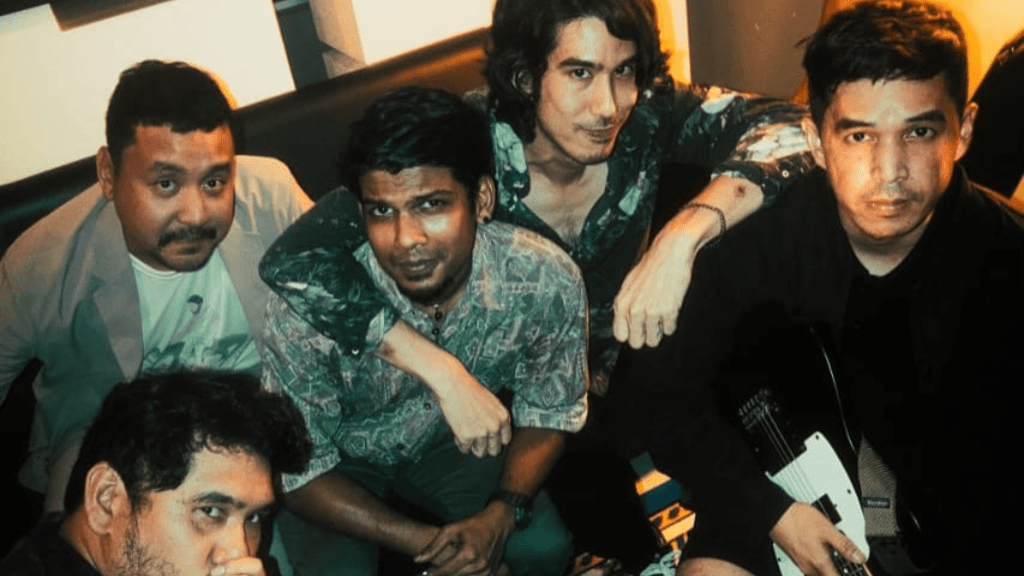
This song was released in 2023 but has me rethinking local music in the best way. Their sound merges catchy basslines with harmonic synth layers, evoking an analog, retro-futuristic symbiosis that cuts through the usual noise. It’s a nostalgic yet fresh aesthetic that feels right at home in the current scene. We’ve cycled through waves of ballads and punk, and now, bands like LUST and Golden Mammoth are leaning into a psychedelic-pop groove that’s immersive and lush. It’s a direction that feels overdue, and I’m all here for it.
An Old Album I Discovered/Rediscovered This Year:
Music is inherently political. Sound has long been used as a weapon in warfare — the sirens, the drones, the rumble of bombs — and as the cries and pleas that echo in their wake. Music lives in us, connecting us in ways words cannot. I’m drawn to Palestinian soundscapes, where traditional instruments like the Oud and Basuq are with orchestral tangents to create a delicate and deeply charged atmosphere.
I’ve been exploring the language of resistance within these layers, where even an upbeat tempo often carries a hidden sense of longing. In the Palestinian classic Nassam Alayna El Hawa, the lyrics: “There’s a wallflower, a small window / take me to them / oh breeze,” expresses a yearning for a homeland that feels just out of reach. But beneath the surface, there’s also an underlying anxiety. In response, I wrote: “Keep me whole; let me rest beside my mother, as steady as the valley that has never left us. Do not incinerate me to ash.” The sounds of Palestine balance between rootedness and fear of displacement, capturing the tension between hope and the ever-present fear of loss.
Biggest Disappointment:
The credibility of music journalism has been steadily declining, and I find it frustrating how the voices of true critics are overshadowed by the likes of Pitchfork and pseudo-critics like Anthony Fantano. Recently, Halsey’s album The Great Impersonator received a score of 4.8/10, which, from an objective standpoint, isn’t an outlandish assessment, nor is it inherently indicative of a “pop” album. In fact, Pitchfork’s history of harsh, sometimes brutal ratings was once considered a benchmark for serious criticism.
While I firmly believe that women in music should not be shielded from criticism due to their mental health struggles, the misogynistic rhetoric surrounding Halsey — framing her as someone with a victimhood complex— has only set us back. What’s worse is the role of stan culture, which has turned every rating below a 5 into a spectacle of outrage. The backlash to Pitchfork’s review, particularly Halsey’s own pointed response to her reputation, only serves to diminish the very idea of music journalism. What’s been obscured in the noise is a commitment to legitimate analysis and the space for critics who engage deeply with the work.
Biggest Surprise:
Tongtongfest’s postponement – thanks to licensing hiccups and the injury to a band member of the headliner Squid only perpetuates the precarity of Malaysia’s music scene. But the team behind the music festival pulled through with remarkable crisis management, swiftly rolling out announcements, refunds and a clever incentive: complimentary entry to Diet TTF — even for those who cashed in on their refunds. It’s commendable how they managed to organize security, recruit temporary staff and set up booths in such a constrained time-frame.
Studio AB turned out to be a surprisingly versatile venue with a layout that facilitated crowd flow between the digital and analog stage. I was drawn to the tongue-in-cheek banner proclaiming “Another music festival with a great lineup but it got postponed so it’s just Diet TTF.” It was a droll nod to the circumstances, but the Diet branding left something to be desired. If anything, it reduces its scale to a mere shadow of its potential. I found myself wishing for a more original marketing approach that could elevate the festival’s identity, rather than leaning into the microtrend of ‘brat summer’.
But the truth is, it works. Festival culture is inseparable from the spectacle, it’s a strategy that moves the needle, sells tickets and supports the musicians. Between sips of RM5 water and the sea of tote bags and band tees, it’s clear that a festival is as much about image as it is about music.

 noisy headspace
Leave a reply to Vasily Cancel reply